
The summer fun has begun and we couldn’t be more excited! We spend most of our summer days somewhere near water, whether it’s hanging out at the pool or down by the lake. It’s so nice to jump in and cool off when it gets hot outside! The kids could spend all day in the water, splashing and playing.
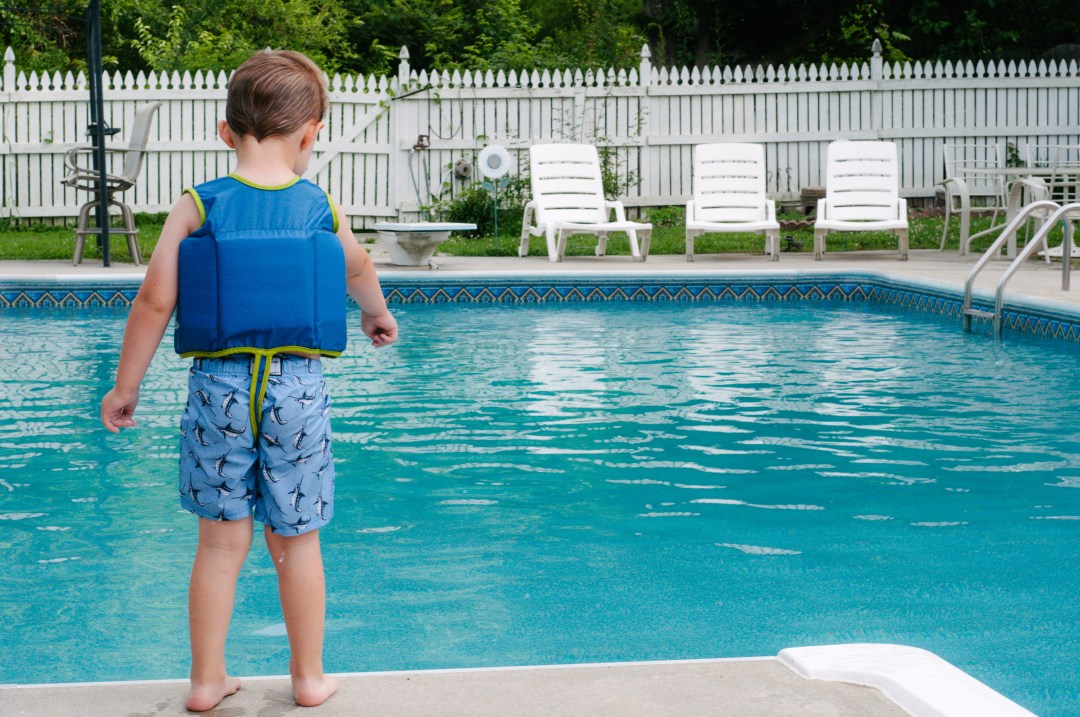
 We started getting Brady used to water and encouraging him to learn to swim last year. I really want him to love water and develop a love for the water, but it’s also really important to me that he learn water safety.
Visit the American Red Cross for information on swimming lessons and how to prevent drowning accidents.
Why Learning to Swim Is One of the Most Important Skills for Kids
Table of Contents
One thing I’ve learned as a parent is that swimming isn’t just another activity — it’s a life skill. Between pool days, beach trips and vacations near water, it’s something that gives both kids and parents a lot more confidence.
In fact, research shows that formal swim lessons can reduce the risk of drowning by about 88% for children ages 1–4, which is why many experts encourage starting lessons early.
That statistic alone is enough to make swim lessons feel like one of the most important things we can do for our kids.
When Should Kids Start Swim Lessons?
Many pediatric experts say children can start learning basic water safety skills as early as age 1, depending on readiness and comfort in the water.
Early swim lessons usually focus on:
-
Getting comfortable in the water
-
Floating on the back
-
Kicking and basic movement
-
Learning how to safely exit the pool
Even if your child is still little, these early skills can make a huge difference.
Benefits of Swim Lessons for Kids
Learning to swim isn’t just about safety. It also helps kids grow in other ways.
Water Safety Skills
Kids learn how to float, tread water and move safely in the water, which helps prevent accidents.
Confidence
Once kids learn how to swim, their confidence around water grows quickly.
Physical Fitness
Swimming strengthens muscles, coordination and cardiovascular health while being gentle on growing bodies.
Cognitive Development
Some research even shows children in swim programs may experience improved cognitive development and motor skills.
Tips for Helping Kids Feel Comfortable in the Water
If your child is nervous about swim lessons, you’re definitely not alone. A few simple things can help:
-
Start with short, positive swim sessions
-
Use fun pool toys to make it playful
-
Praise effort instead of perfection
-
Let them move at their own pace
The goal in the beginning is simply building comfort and confidence in the water.
Making Swim Lessons Part of Your Family Routine
One of the best things about swim lessons is that they can turn into something kids genuinely love.
Over time, swimming opens the door to so many fun experiences like:
-
Pool days with friends
-
Beach vacations
-
Water parks
-
Boating and paddleboarding
-
Family lake trips
And as parents, there’s a lot of peace of mind that comes from knowing your child has the skills to stay safer around water.

Pin this Post for Later

Kindergarten Readiness: Transitioning from Summer Fun to School Year Success
Kindergarten Readiness: Transitioning from Summer Fun to School Year Success


